
A four camera wired system on an ordinary single storey home costs from $1,690 installed, and most jobs finish somewhere under $2,600. This guide covers what you get at each price and why two quotes for the same house can be so far apart.
Most installers will not put a price on their website. We would rather show the numbers, explain what moves them, and leave you able to judge any quote you get, including ours.
If you already own cameras and want them put up properly, installation starts at $490. That price covers a basic wired camera on a single storey house with roof space we can get into: heavy duty Cat6 cable, the plugs on each end, connection to your recorder and the app set up on your family’s phones. Hardware is not included, and gear you bought yourself is covered by the seller’s warranty, not ours.
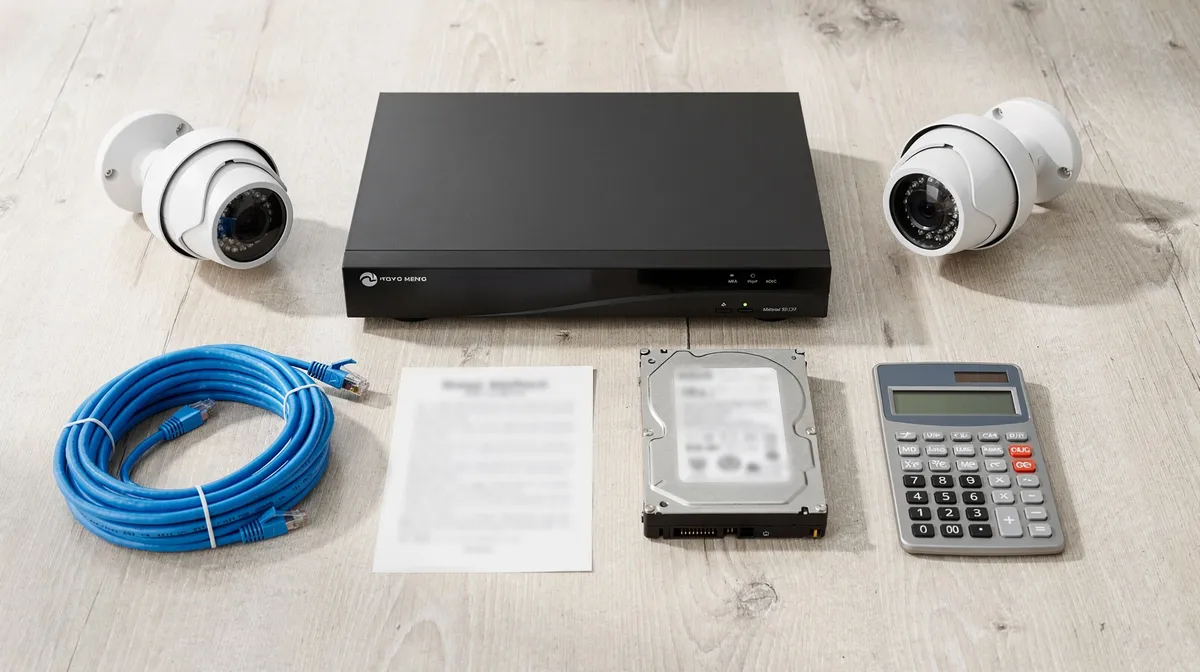
A complete four camera 4K wired system starts at $1,690 installed. You get four weatherproof turret cameras, a four channel 4K network video recorder fitted with a surveillance hard drive, Cat6 hidden in the roof to every camera, and phone viewing for the household. Hardware has a three year warranty and our workmanship has five.
The active deterrence package starts at $1,890. It is installed the same way, but each camera has a siren and a strobe light, colour night vision in place of black and white infrared, and two way audio so you can talk through the camera from your phone. The cameras can tell people and vehicles apart from animals, which cuts out most false alerts. It comes with an eight channel recorder, leaving four spare channels for later.
Camera prices are fixed. The labour is what changes from house to house, and that mostly comes down to how easily the cable can be run.
A house with a flat roof, a skillion extension or raked ceilings has no cavity to hide cable in. The cable then goes in conduit on the outside, which takes longer to do neatly. Two storey homes mean longer runs, more ladder work and a second person for anything up high.
Distance matters on bigger blocks. A network cable carries power and video for about 90 metres. A shed or gate further away than that needs a powered switch along the way or a short fibre link, which is a real part cost and not an extra we invent.
Each additional camera adds a camera, a cable and time on the ladder, but six cameras costs about a third more than four, not half as much again. Longer recording time needs a bigger drive, and keeping thirty days of footage from eight 4K cameras takes far more storage than a week from four. Old coax from an analogue system can sometimes be reused, but we test it before saying so.
When one price is well below the rest, something has usually been left out. These are the common ones.
The cable goes on the outside. Clipping cable along the fascia and down the wall is much faster than running it through the roof. It shows, it breaks down in the sun, and anyone who wants the cameras off can cut it in seconds.
The 4K is only on the box. Many kits ship set to a low recording bitrate, which throws away most of the detail. A 4K camera recording that way gives you a picture not much better than 1080p.
The drive is too small. Everything looks fine on day one, but the recorder writes over itself after five or six days, and you only find out when you need footage from two weeks ago.
There is no licence. In Queensland, installing security cameras needs a security equipment installer licence, and running the cable needs ACMA cabler registration. Someone without either has lower costs. Ours are QLD Security Provider Licence 4930731 and ACMA Registered Cabler A058225.
Nobody checks the picture. Cameras go up at the same height and angle on every house, and the footage ends up full of people you cannot identify. Our guide to how many cameras you need explains where cameras should go.
Very little. Power reaches each camera through the same cable as the video, and a whole system uses about as much electricity as a couple of light globes. Footage is stored on the drive at your place, so there is no monthly fee, no cloud plan and no charge per camera.
The one part that wears out is the hard drive. Surveillance drives are built to record all day, every day, but they usually last three to six years. A new one does not cost much and takes about twenty minutes to fit.
For most homes, a system costs less than the excess on one car insurance claim. The surprise for many owners is how often they use it for ordinary things: seeing whether a parcel arrived, checking who came to the door, keeping an eye on a parent in a granny flat, or sorting out who scraped a car in the driveway.
If you are comparing prices now, ask every installer for the same four details: cable type, cable route, drive size and licence numbers. With those written down, the quotes are easy to compare.
No. The quote is free and in writing, listing every camera, where it goes, the gear and how the cable will run.
Usually the cabling. The low quote often runs cable on the outside of the house, fits a smaller drive or cheaper cameras, or comes from someone who is not a registered cabler. Ask each installer to write down the cable type and route, the drive size and their licence numbers, and compare those.
A bit. Mounting on the upper level takes longer, the cable runs are longer and a second person is needed on the ladder. It adds time to the job rather than putting you on a different price list.
Yes, as long as the recorder has free channels. We suggest an eight channel recorder even for four cameras for that reason, so a fifth camera later is just a cable and a mount.
Most homes need four. How to check whether yours does, and which camera positions do the real work.
Buying adviceWhere wifi and battery cameras work, where they let you down, and how long a battery really lasts on a busy driveway.
QueenslandYour own property, the footpath, sound recording and business rules, explained in plain English. This is not legal advice.
HiringThe licences a Queensland installer needs, why cabling registration counts, and what to ask before you book.
Buying adviceHow the three brands we fit most often compare, and why the sensor and lens count for more than the logo.
Four camera 4K home systems from $1,690 installed, planned around estate homes, older brick homes and bigger blocks.
CommercialFactory units, shops and offices, with weeks of recording and logins for each staff member.
RepairsDead cameras, beeping recorders, broken apps and old analogue systems brought back or replaced.
DeterrenceCameras with a siren, strobes and a voice warning, from $1,890 for four installed.
Cameras and cabling in Bald Hills 4036.
4017Cameras and cabling in Bracken Ridge 4017.
4500Cameras and cabling in Bray Park 4500.
4500Cameras and cabling in Brendale 4500.
4035Cameras and cabling in Bridgeman Downs 4035.
4034Cameras and cabling in Carseldine 4034.
Tell us a bit about the property and we will send a written, itemised quote.
Thanks. Your details have gone to Richard (QLD Lic #4930731, ACMA #A058225), who will look over the property and send a written, itemised price within 15 to 30 minutes during trade hours.